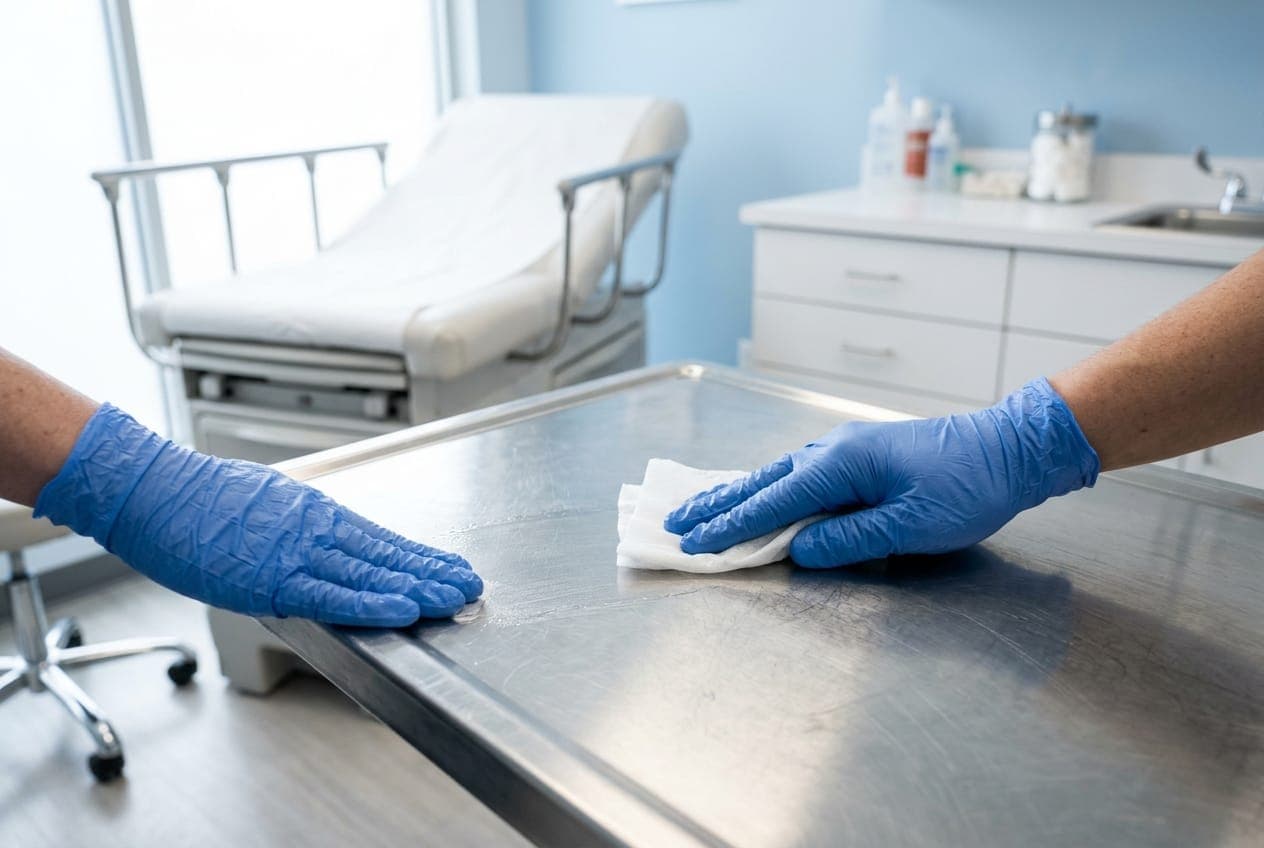
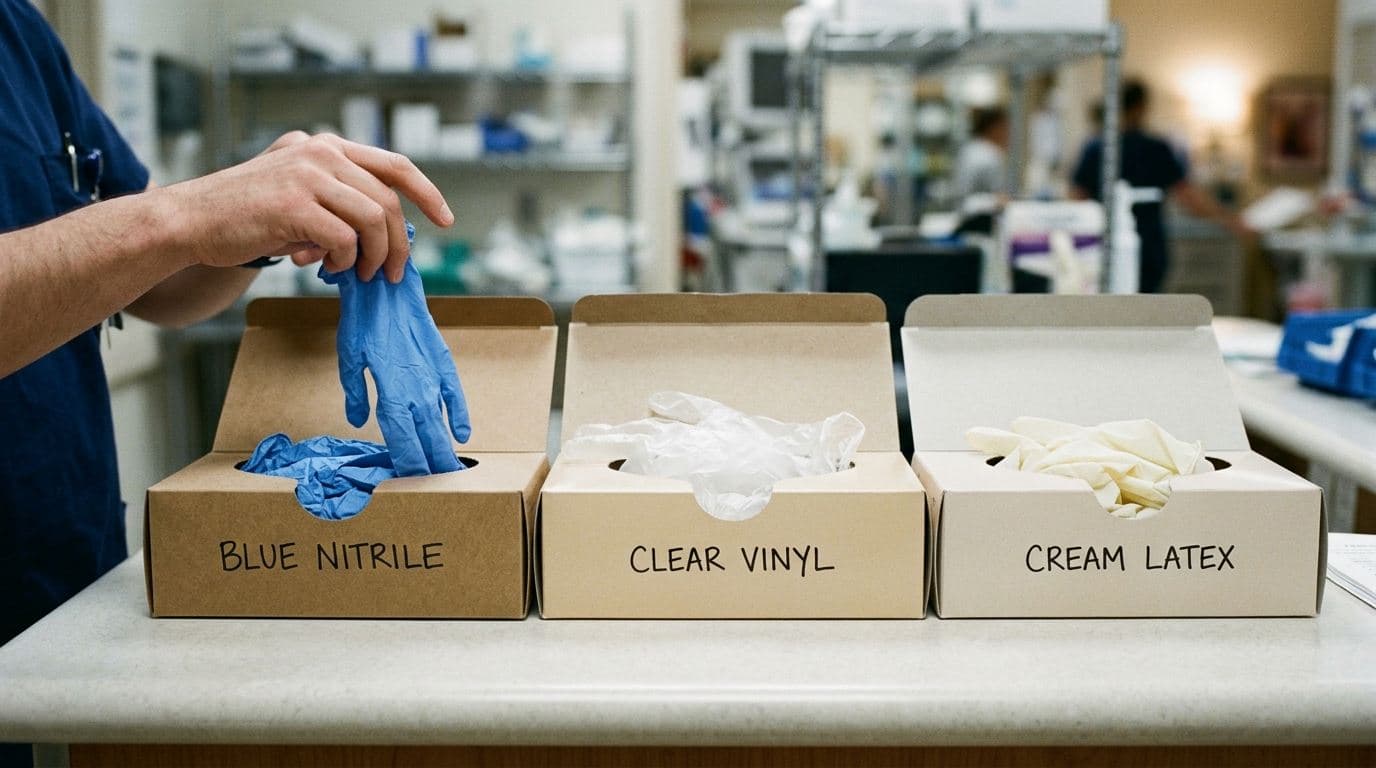
Exam gloves look interchangeable on the shelf and behave very differently on the hand. Buying the wrong material either wastes budget on protection a task does not need or exposes staff to risks a cheaper glove cannot handle. The decision comes down to three materials and the jobs they are built for.
Nitrile: the workhorse
Synthetic nitrile has become the default for healthcare and most institutional use, and for good reason: strong puncture resistance, good chemical resistance, and no latex proteins, which removes the allergy question for both staff and the people they touch. It costs more than vinyl, and earns it anywhere fluids, sharps, or chemicals are in play.
Vinyl: the economy play
Vinyl gloves are the low-cost option for low-risk, short-duration tasks: food handling, light cleaning, routine non-clinical contact. They are looser fitting and less durable under stress, which is acceptable when the glove changes every few minutes and nothing hazardous is on the other side of it.
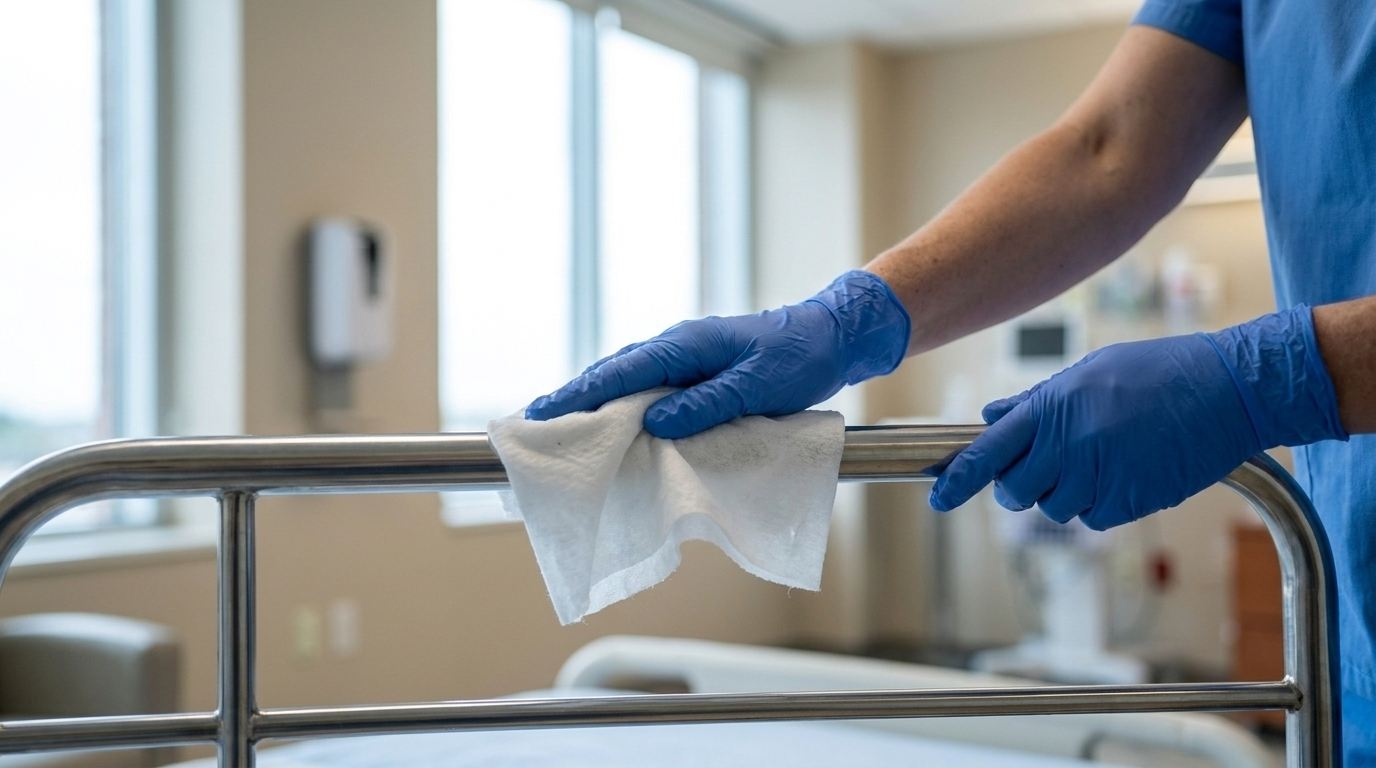
Latex: the fit specialist
Natural latex still offers the best tactile feel and elastic fit, which is why some clinical users prefer it. Its liability is well known: latex allergies among staff and patients. Many facilities have moved latex-free entirely to eliminate the risk category altogether — if you keep latex, you need a powder-free product and an allergy protocol.
The buying checklist
- Match material to task risk, not habit
- Check thickness (mil rating) against duty, and cuff length where splash is a concern
- Confirm exam-grade rating where required
- Standardize sizes and stock all of them — a glove that does not fit does not protect
ASP stocks exam gloves across materials and sizes through the CompCare store and quotes case and pallet volumes for facilities and agencies.
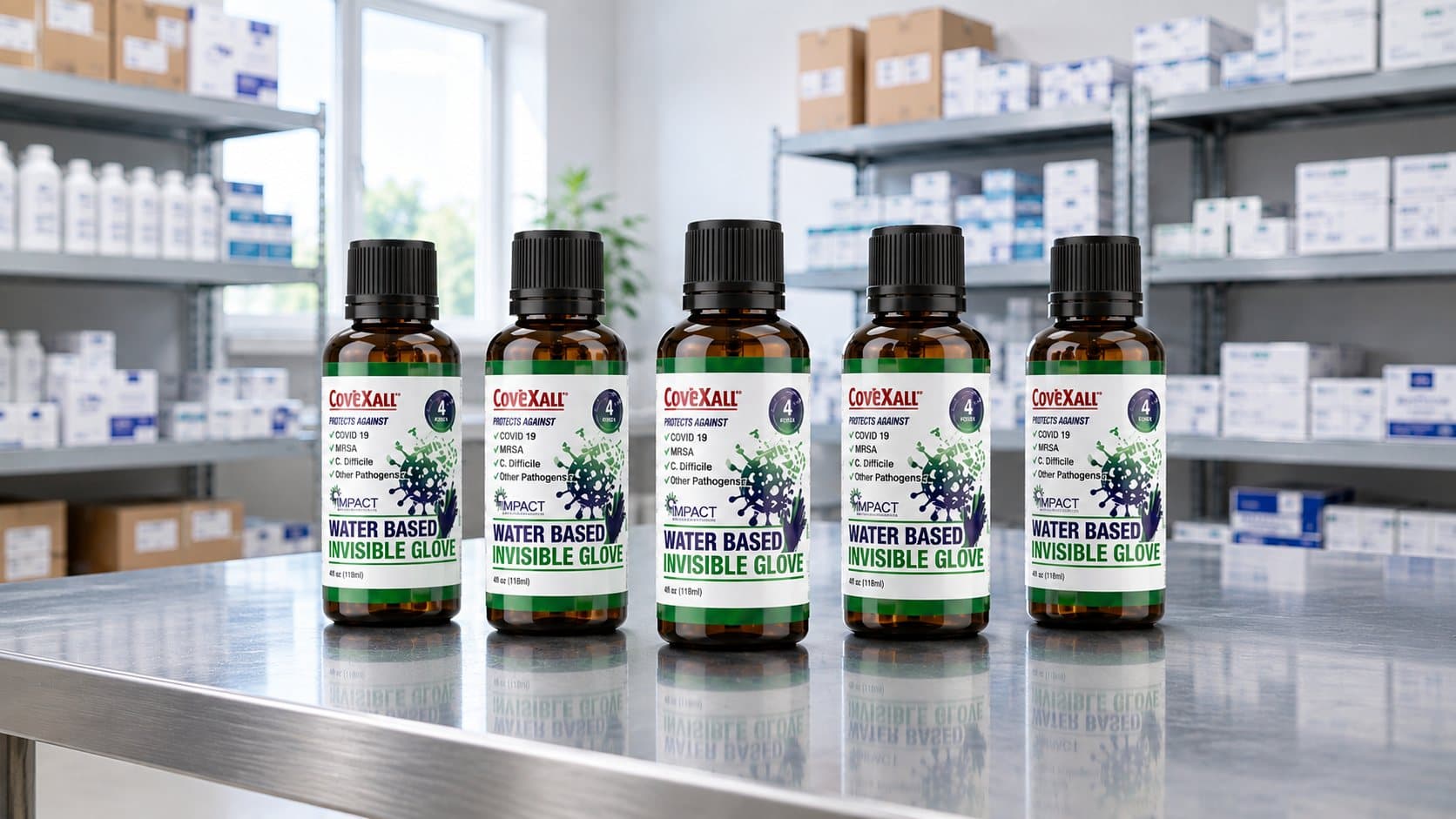
Covexall is a topical hand sanitizer for external use only. Performance figures referenced in this article are drawn from the 2022 Covexall white paper and the independent laboratory studies cited in it, including testing conducted at Arizona State University's Biodesign Institute. Continued antimicrobial activity lasts up to four hours after application.