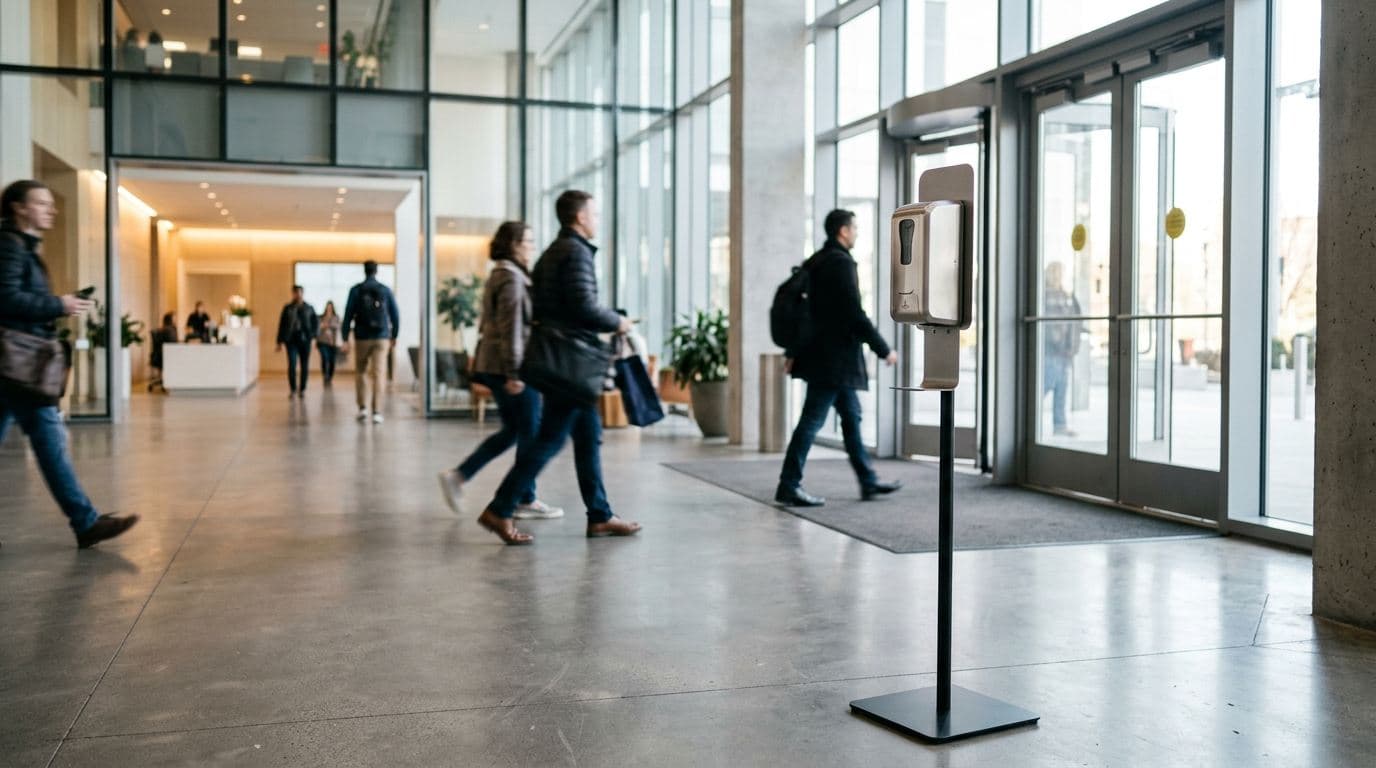
Facilities talk about hand hygiene compliance as a behavior problem. It is a layout problem first. People sanitize when the dispenser is in their path at the moment the thought occurs, and they do not when it is eight steps away. Placement is the cheapest compliance intervention that exists.
Where dispensers belong
- Every entrance, positioned in the walking line, not beside the door frame people pass at speed
- Decision points: elevator banks, stair doors, cafeteria entries, checkout lines — anywhere people pause
- Point of task: nurse stations, med carts, shared equipment, fitness machines, conference rooms
- Visible sight lines: a dispenser people can see from ten feet away advertises itself; one around a corner may as well not exist
The mistakes that kill usage
Mounting at awkward heights. Letting units sit empty, which trains people to stop trying. Placing one dispenser per floor to check a box. And the quiet one: fire code. Alcohol-based sanitizer is flammable, and codes restrict how much can be dispensed and stored and where — which is why alcohol dispensers so often end up in compliant-but-useless locations instead of the high-traffic spots that drive usage.
The formulation shortcut
A non-flammable, water-based sanitizer like Covexall removes the fire-code constraint entirely: dispensers go where traffic is, and bulk product stores like any other supply. Add a formulation that does not crack skin — so staff do not learn to avoid it — and placement plus product does what posters never will. ASP supplies dispensers, brackets, floor stands, and refills as one order, and can help map placement for a building.
Covexall is a topical hand sanitizer for external use only. Performance figures referenced in this article are drawn from the 2022 Covexall white paper and the independent laboratory studies cited in it, including testing conducted at Arizona State University's Biodesign Institute. Continued antimicrobial activity lasts up to four hours after application.