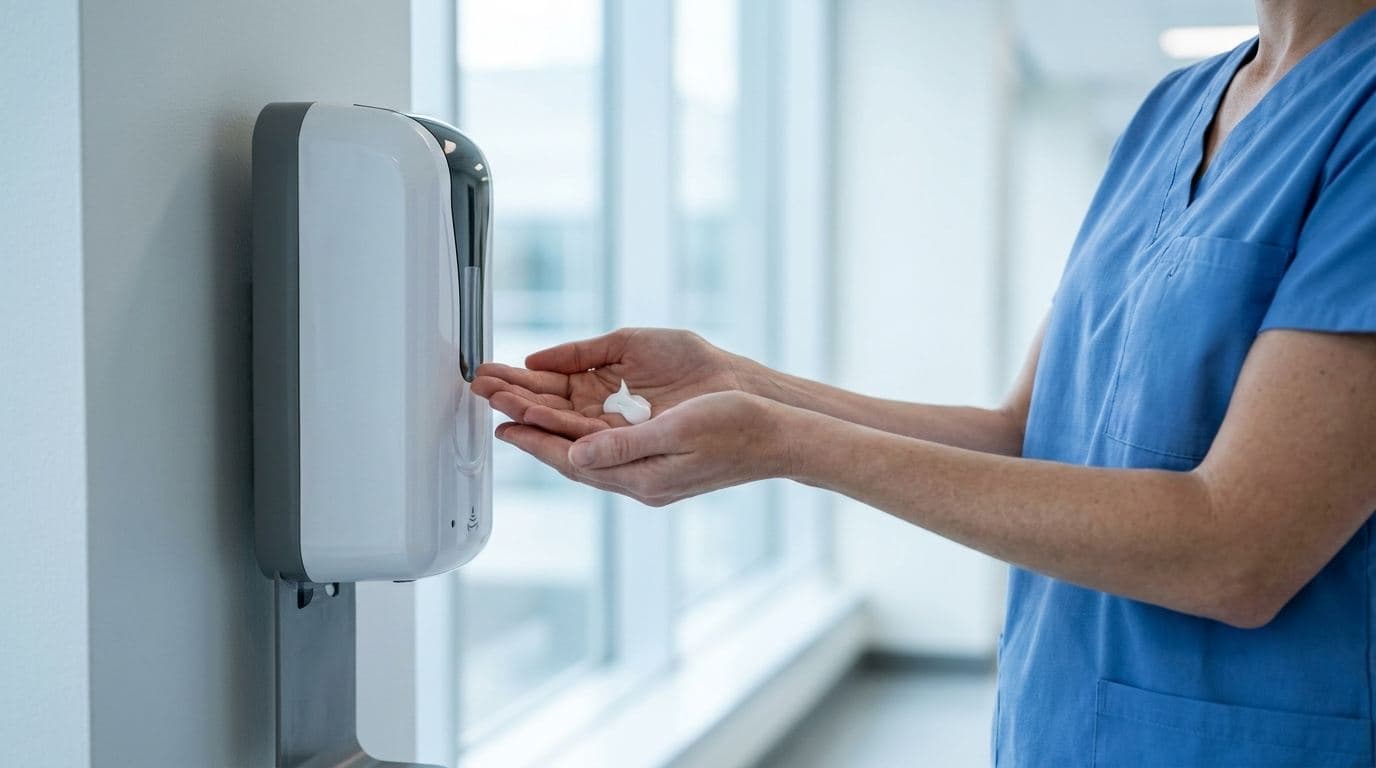
Walk any hospital corridor and you will pass a wall-mounted sanitizer dispenser every few doors. What most facility managers inherit with those dispensers is a set of problems so familiar they stopped being questioned: staff with dry, cracked hands by February, fire-code paperwork for storing drums of flammable gel, and a product nobody wants to use over a paper cut.
None of those problems come from sanitizing. All of them come from alcohol.
The skin problem is a safety problem
Alcohol works by stripping — and what it strips includes the skin's natural oils, which serve as both moisturizer and part of the body's own antimicrobial defense. Flush those oils away dozens of times a shift and hands dry out and crack, opening tiny fissures that run into the epidermis. Each fissure is a new entry point for exactly the bacteria and viruses the sanitizer was supposed to keep out. For anyone with a cut or scrape, alcohol application also simply hurts, which quietly suppresses how often people sanitize at all.
A water-based formulation inverts this. Covexall is a moisturizing lotion that dries within about 30 seconds, is hypoallergenic, painless on broken skin, and leaves hands soft instead of stripped. Compliance improves when compliance stops hurting.
The fire-code problem
The FDA recommends 60 to 90 percent alcohol concentration for alcohol sanitizers to work, and at those concentrations the product is a fire hazard. Hospitals and medical facilities must consult local fire authorities and comply with strict codes on where flammable products can be dispensed and how much can be stored, which is why alcohol dispensers so often end up in awkward, low-traffic locations rather than where hygiene actually happens.
Covexall is non-flammable. Dispensers go where they are useful, bulk product stores like any other supply, and the fire-marshal conversation disappears. It also will not stain surfaces, and the nontoxic formula is safer around children if accidentally ingested, which matters in schools and pediatric settings.
None of it costs kill performance
The trade facilities assume they are making — safety and comfort in exchange for weaker protection — is not the trade. In independent kill-rate testing across eleven bacterial species, a 60-second exposure to Covexall achieved complete kill in all eleven, and testing against C. difficile showed complete kill of both active cultures and spores. It kills 99.9 percent of pathogens on contact.
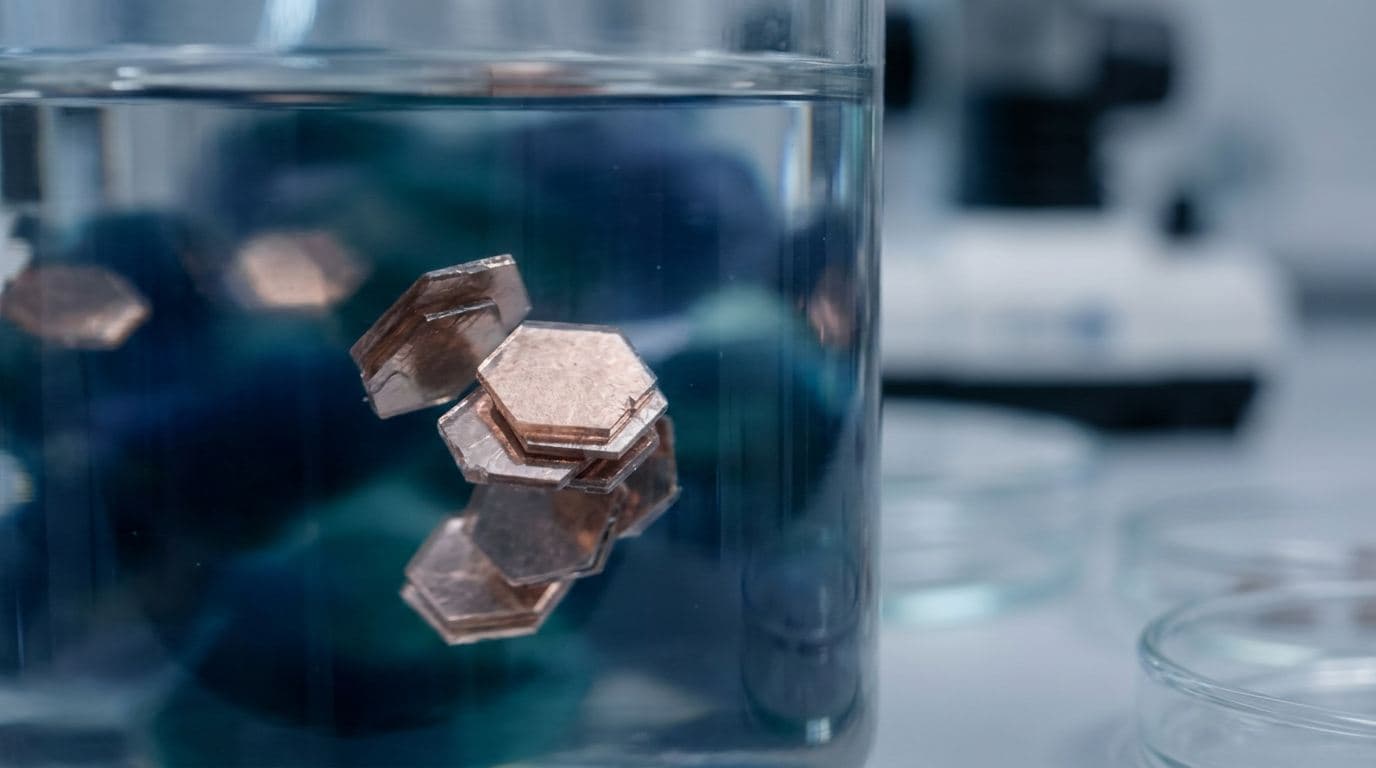
Then it does the thing alcohol cannot: it keeps working. Alcohol sanitizer is effective at the moment of application and lasts only until it evaporates, so every new touch is new contamination. Covexall's copper-infused microplatelet technology remains active after drying, with Biosafety Level 3 laboratory testing at Arizona State University's Biodesign Institute confirming continued kill of the SARS-CoV-2 virus at one hour and four hours after application.
The bottom line for buyers
- Kills 99.9 percent of pathogens on contact, with continued activity up to four hours after application
- Moisturizing, hypoallergenic, and painless on cuts and scrapes
- Non-flammable: no fire-code placement or storage restrictions
- Will not stain surfaces; nontoxic formula is safer for children
- Complete kill of C. difficile cultures and spores in laboratory testing
For facilities that run on hand hygiene — healthcare, education, corrections, food service, and offices — water-based protection is not a compromise. It removes the compromises the industry got used to making.
Covexall is a topical hand sanitizer for external use only. Performance figures referenced in this article are drawn from the 2022 Covexall white paper and the independent laboratory studies cited in it, including testing conducted at Arizona State University's Biodesign Institute. Continued antimicrobial activity lasts up to four hours after application.